
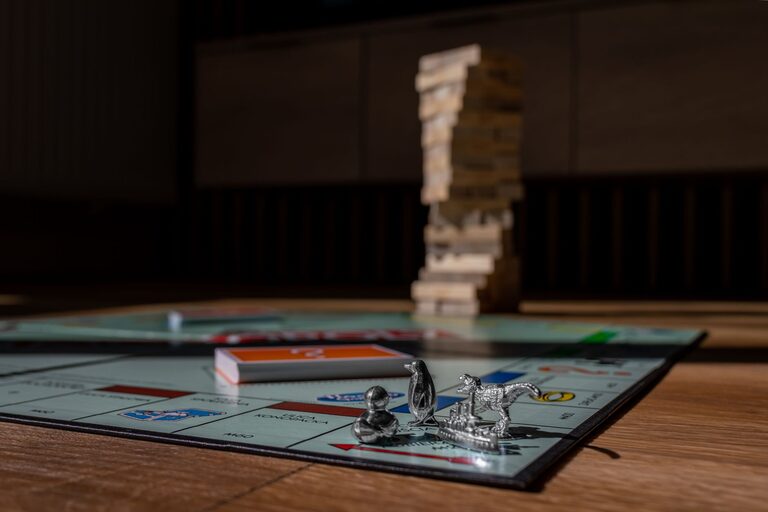

A family game night is a simple way to spend quality time together without leaving home. You do not need a large collection of games or a complicated plan. With a few familiar favourites, some creative activities, and a relaxed attitude, you can create an evening that everyone enjoys.
The best game nights focus on connection rather than competition. Choose activities that suit your family’s ages and interests, keep the rules easy to follow, and leave room for plenty of laughter.
Start with a simple plan
A little preparation can make the evening run smoothly. Choose a day when most family members are free and decide how long you would like the event to last. One to two hours is often enough, especially for younger children.
Before the games begin:
– Clear a table or open space for playing.
– Gather games, paper, pencils, and any other supplies.
– Prepare simple snacks and drinks.
– Decide who will choose the first game.
– Set aside phones and other distractions if everyone agrees.
– Explain that the goal is to enjoy time together, not just to win.
You can also create a small game night schedule. For example, begin with a quick warm-up game, play a longer board game next, and finish with a calm activity such as drawing or storytelling.
Classic board and card games
Board and card games are reliable choices because they offer a range of difficulty levels and playing times. Select games that match the ages and attention spans of the people taking part.
Easy games for mixed ages
Games with simple rules can help everyone participate, including younger children or guests who do not often play games. Consider activities such as:
– Matching and memory games
– Picture bingo
– Simple card games
– Dominoes
– Checkers
– Word or picture guessing games
– Dice games with basic scoring
For younger players, read the instructions aloud and demonstrate one round before starting. It can also help to pair a younger child with an older player.
Longer strategy games
If your family enjoys planning and decision-making, choose a game that takes more time. Cooperative games, building games, and light strategy games can encourage players to think ahead while still keeping the mood friendly.
To make a longer game more approachable, divide it into sections or set a time limit. If the game is not finished when time is up, everyone can agree on a stopping point and celebrate the progress made.
Try cooperative games
Not every game needs a winner. Cooperative games give everyone the same goal, which can be especially helpful when different ages or experience levels are playing together.
Work as a team to solve a puzzle, complete a challenge, build a structure, or reach a target before time runs out. You can also turn a familiar competitive game into a cooperative one by asking the family to reach a combined score.
Here are a few cooperative ideas:
– Build the tallest tower from blocks or paper cups.
– Complete a jigsaw puzzle before the snack break.
– Solve a series of clues hidden around the house.
– Tell a story together, with each person adding one sentence.
– Sort a collection of objects by colour, size, or shape before a timer ends.
Cooperative games often create a more relaxed atmosphere and give family members a chance to encourage one another.
Add creative challenges
Creative activities are a great choice when you want something different from traditional games. They can be adapted for nearly any age and usually require only basic household supplies.
Drawing relay
Give each person a sheet of paper and a pencil or marker. One player begins a drawing for 30 seconds, then passes it to the next person. Continue until everyone has added to each picture. At the end, display the finished drawings and create names for them.
Household scavenger hunt
Write a list of items for players to find around the home. Keep the clues simple and safe, such as:
– Something soft
– An object that begins with the letter B
– Something older than you
– An item with a pattern
– Something that makes a sound
Players can work in pairs or as one group. For younger children, use pictures instead of written clues.
Build and create
Use blocks, recycled containers, craft supplies, or paper to set a building challenge. Ask players to create a bridge, a small town, a vehicle, or a structure that can hold a particular object. Give everyone time to explain their design at the end.
Set up a family quiz
A quiz can be prepared in advance or created as you go. Include questions that cover several interests so that everyone has a chance to participate.
Possible categories include:
– Family memories
– Animals
– Films and books
– Food
– Nature
– Music
– General knowledge
– Funny household facts
Avoid questions that may embarrass someone or make one person feel left out. You can also let each family member write a few questions. This gives everyone a role and often leads to interesting conversations.
For a simpler version, ask “Would you rather?” questions or present two choices. For example, players might choose between camping in the mountains or visiting the beach. There are no right answers, and the discussion can be just as enjoyable as the game.
Make the room part of the fun
A small theme can make an ordinary evening feel special. The theme does not need to involve much preparation. Try a colour theme, a favourite film theme, or a cosy “pajama night” approach.
You might:
– Use blankets and cushions for comfortable seating.
– Create simple paper name cards.
– Play background music at a low volume.
– Use a small sign to welcome everyone.
– Set up a snack station.
– Give the evening a playful name.
Let family members help with the setup. Children can decorate the table, arrange game pieces, or choose the music. Taking part in the preparation makes the event feel like a shared activity from the beginning.
Keep snacks easy
Game night snacks should be simple to eat and easy to clean up. Choose foods that do not require much preparation or create a mess around game pieces.
Good options include:
– Cut fruit and vegetables
– Popcorn
– Crackers and cheese
– Mini sandwiches
– Pretzels
– Muffins
– Water, juice, or warm drinks
Use small bowls and cups to keep the playing area organised. If a game involves cards or paper pieces, place snacks on a nearby table rather than directly beside the game.
Create traditions
A regular tradition can give everyone something to look forward to. You might hold game night every Friday, once a month, or whenever the family has a free evening.
Consider adding a few recurring traditions:
– Let a different person choose the first game each time.
– Keep a family score sheet for friendly challenges.
– Take a photo of the game table after each event.
– End with a favourite dessert.
– Create a rotating “game night host” role.
– Let the winner or the group choose next week’s activity.
Most importantly, keep the rules flexible. If a game is taking too long or no one is enjoying it, switch activities without treating it as a failure. A successful family game night is one where people feel included, relaxed, and happy to spend time together.